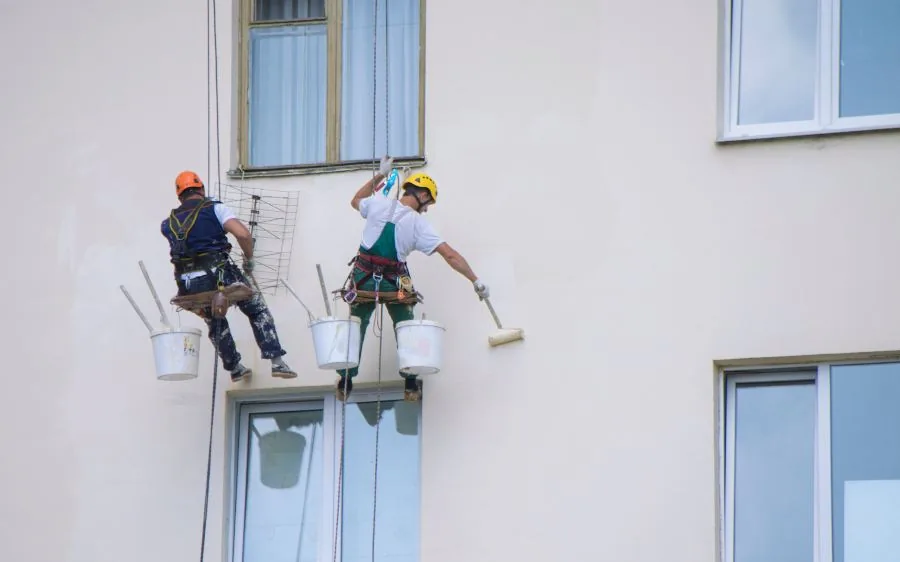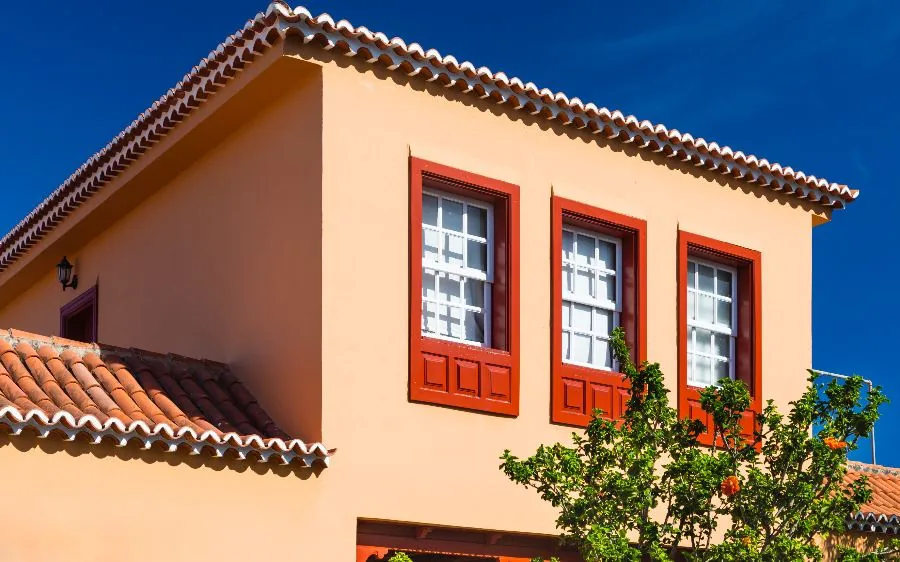
Every week we walk a house in Palm Beach County that was painted three or four years ago and already looks tired. The homeowner usually blames the paint. Nine times out of ten the paint was fine. The prep was not. Here is what goes wrong on South Florida exteriors and what a proper repaint does about it.
Chalking
Rub your hand on the wall. If it comes back powdery, the paint is chalking. UV has broken down the binder and left the pigment loose on the surface. New paint applied over chalk sticks to the chalk, not the wall, and peels off in sheets. The fix: wash thoroughly, test for residual chalk, and prime with a masonry conditioner that penetrates and binds the surface before topcoating.
Efflorescence
White, crusty mineral deposits on stucco, common on canal homes in Fort Lauderdale and Boca Raton and on any wall that stays damp. Water moving through the wall dissolves salts and leaves them on the surface as it evaporates. Paint over it and the salts push the new paint off. The fix: remove the deposits, find and address the moisture source, and use a primer formulated to resist efflorescence.
Mildew
Green, gray, or black spots, usually on north walls, under eaves, behind shrubs, and anywhere shaded and damp. It is alive, and paint will not kill it. Painting over mildew means it grows through the new film within months. The fix: wash with a mildewcide solution, rinse, let the wall dry fully, and use a mildew-resistant exterior paint.
Blistering
Bubbles in the paint film. Two causes: painting a damp surface so trapped moisture vaporizes under the film, or painting a hot wall in direct sun so the surface skins over before the solvent escapes. Both are timing problems. The fix: paint dry surfaces, follow the shade, and avoid the hottest part of a summer day.
Peeling at trim, fascia, and joints
Wood moves with humidity. Caulk cracks, water gets behind the paint, and the film lifts from the edges. The fix: cut out failed caulk, re-caulk with a quality elastomeric sealant, prime bare wood, and replace anything that has rotted. Painting over rotted fascia is throwing money away.
Fading
Deep colors fade fastest because they rely on organic pigments that UV breaks down. Reds, blues, and dark greens on a south-facing wall can look washed out in three years. The fix: choose UV-stable formulas, understand which shades hold up, and consider a slightly lighter version of the color you want.
Hairline cracks telegraphing through
Stucco cracks that were painted over instead of filled show up again within a season. The fix: open, fill, and texture-match every crack before priming. On walls with active hairline cracking, an elastomeric coating bridges movement. On sound walls, a breathable acrylic is better.
The pattern
Every one of these failures is a prep failure or a timing failure. That is why our proposals list the wash, the repairs, the primer, and the schedule before they list the paint. See how we approach exterior painting and stucco repair.
Is your paint already failing?
We will tell you what caused it and what it takes to fix it properly.